
 CREATIVE INTELLIGENCE STUDIO
Brand & identity
Bad guys don’t have iPhones. Apple makes sure of it.
Did you know an iPhone could give a movie character away? An anecdote shared by Rian Johnson in 2020 says a lot about controlling a brand’s image.
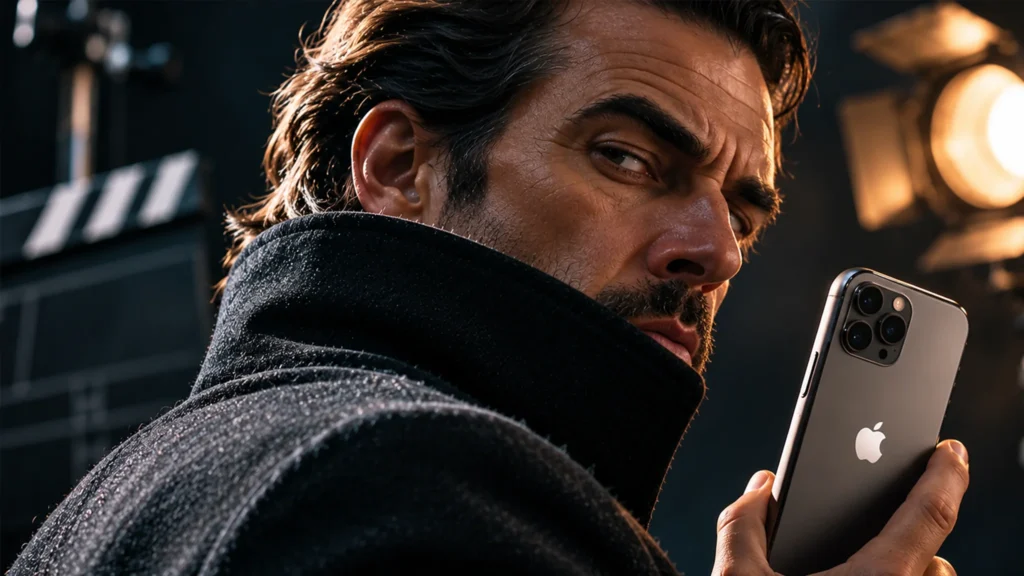
In movies, criminals can lie, steal and blow up cars. But use an iPhone? That, apparently, is a little more complicated.
Did you know a phone could give you a clue to the villain’s identity?
Back in February 2020, Knives Out director Rian Johnson shared a surprising detail in an interview with Vanity Fair: Apple allowed its iPhones to appear in movies, but, according to him, not in the hands of the bad guys.
The director immediately realized he might have spoiled a few plots. Picture a crime thriller. Everyone is a suspect. One character pulls out an iPhone. You may have just ruled someone out.
The anecdote is a few years old, but it still neatly illustrates how far a brand can go to protect its image.
Product placement comes with conditions.
We’re all familiar with product placement in movies. A carefully framed car, a drink in just the right spot, a computer with its logo perfectly visible.
But here, Apple would be taking things a step further. Having the product on screen isn’t enough. Who uses it matters too.
And that’s where this story gets interesting from a branding perspective.
A brand is also shaped by the associations we give it. A likeable hero using a product adds another positive impression. A psychopath planning their next crime on the same device? Let’s just say it’s a tougher sell.
Not a universal law of Hollywood.
Johnson’s statement is documented. Apple, however, has not publicly confirmed a blanket ban covering every film. The practice seems more closely tied to the terms of certain collaborations and product placements.
And there are counterexamples. In House of Cards, Frank Underwood also uses Apple devices. Clearly, owning an iPhone has never been a certificate of good conduct.

What this story really tells us.
Branding doesn’t stop at a logo, a typeface or a colour palette. It also extends to the contexts in which a brand agrees to appear.
Apple wants to be recognized. More than that, it wants to influence how people perceive it.
So the next time you watch a thriller, keep an eye on the phones. With any luck, the culprit will give themselves away before anyone even discovers the crime.
Unless they just happen to have an Android.