
 CREATIVE INTELLIGENCE STUDIO
AI & marketing
This dish doesn’t exist. Bon appétit!
Artificial intelligence can now create dishes that have never been cooked. But when fiction ends up on the menu, the law may have something to say about it.
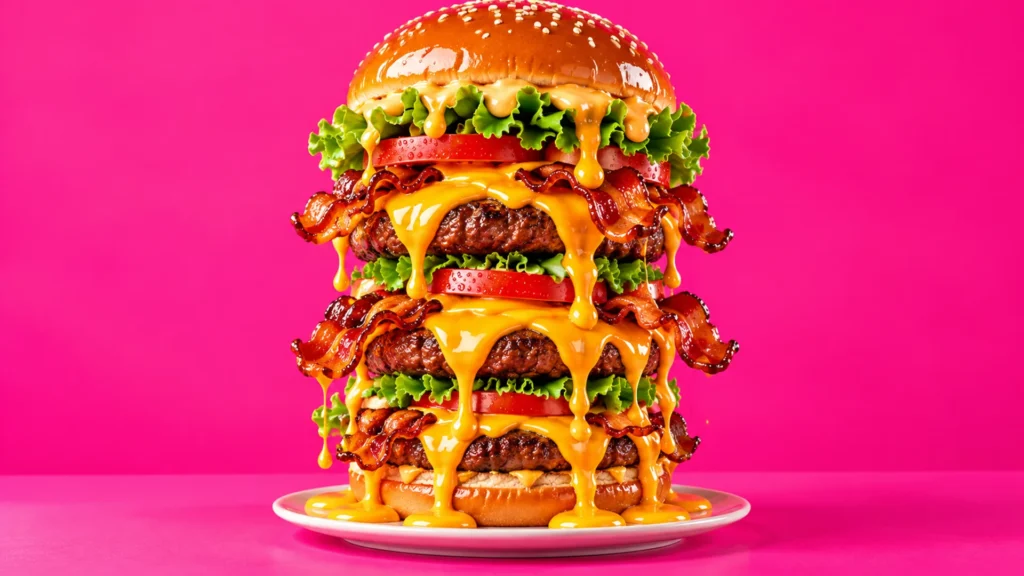
You’re hungry. You browse a restaurant’s online menu. A towering burger, perfectly arranged ingredients, a presentation worthy of a top chef. You place your order.
When it arrives, surprise! The meal doesn’t really look like the picture. Worse still, the dish shown doesn’t even exist in that form in the restaurant’s kitchen.
Welcome to an era where artificial intelligence can sell a dream without even turning on the stove.
Today, restaurants, caterers, bakeries and food businesses can generate spectacular images in seconds. No photographer. No food preparation. Sometimes, not even a real product behind the image.
Imagine a caterer showcasing beautiful buffets they’ve never prepared. Or a restaurant displaying dishes with ingredients it doesn’t even use.
At what point does creative advertising become misleading?
In Quebec, the Consumer Protection Act is fairly clear.
Section 219 prohibits false or misleading representations. Section 221 specifically addresses false claims about a product’s ingredients, dimensions, weight or volume, among other things. And section 218 states that the general impression conveyed to consumers must also be taken into account.
In other words, creating an image with AI doesn’t make legal obligations disappear. And adding “AI-generated image” doesn’t automatically provide legal protection.
Another interesting detail: the law also applies to advertisers. Restaurant owners, caterers, marketing agencies and content creators all have good reason to ask the right questions. Their respective liability will, of course, depend on the circumstances.
Let’s be clear. Artificial intelligence is a fantastic tool. I’m the first to recognize its potential.
But there’s a difference between making a product look its best and inventing one to sell.
After all, when we look at a menu, we expect to see what we can actually order.
AI can have plenty of imagination. Your menu, however, should stay true to what comes out of the kitchen.
Because at the end of the day, the customer is ordering a meal. Not a prompt.
LégisQuébec — Consumer Protection Act, sections 218, 219 and 221 ↗